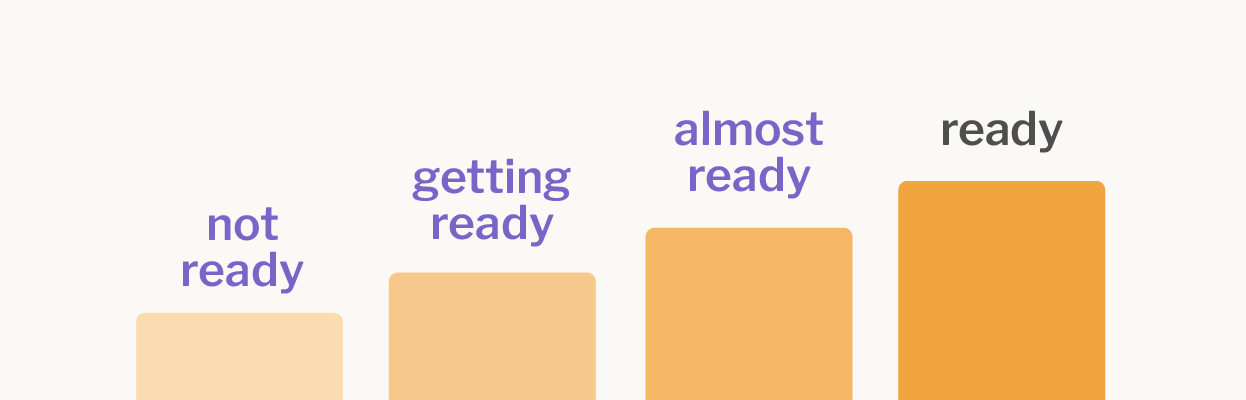
Your team has an AI project on the table. Leadership approved it. Someone built the deck. But before anyone starts, do you know who owns it, whether the budget is real, and whether your team has capacity to execute alongside everything else already in motion?
Most AI projects that stall don’t fail because the idea was wrong. They fail because no one answered those questions before the work began. Worse, by the time the gaps show up (i.e., no owner, budget still pending, team already stretched), the project has already cost you something: capital, burnout, or an abandoned solution.
The Now-Next-Later framework exists to answer those questions before you commit the resources. It gives leadership teams a structured way to evaluate their AI readiness and decide which projects get resourced and when.
The “Resource Requirements” column is where you determine whether you can actually execute. The problem is that most organizations are moving so fast to implement AI that they skip this critical step. Scoring the column comes down to evaluating 4 areas: time, ownership, budget, and organizational support.
How can I assess my organization’s AI readiness?
For each of the 4 areas, there’s a clear signal that tells you whether you’re ready to move forward:
Time. Your team has a realistic window to start in the next 90 days without competing priorities crowding it out.
Ownership. A named person with the mandate and protected time to lead this exists before work begins.
Budget. Funding is approved and allocated; not pending sign-off.
Organizational support. Your leadership team has explicitly agreed this is the right project to resource now.
You’ll score each dimension using the criteria below. We walk through each in more detail.
How to Score AI Project Readiness in 4 Key Areas: A Comprehensive Checklist
Here are the criteria to consider for each key area:

Time and Team Capacity
To think about:
- What’s a realistic timeframe for starting this project?
- How much time will the project take?
- What else will we be doing alongside the project?
You’re not ready OR the project will take a lot of time if:
- The project will take more than 90 days.
- You have 3 or more other projects running at the same time.
- Your team is already at or close to capacity OR the project will be happening during your ‘busy season’.
- The project has already been delayed at least once.
You’re somewhat ready if:
- 2 projects will be in progress at the same time.
- Project timelines partially overlap.
- A start date is available, but could change.
- Teams are moderately busy, but have some bandwidth.
The timing is right if:
- The project will take less than 90 days.
- No other projects are planned.
- A clear start date exists.
- Teams have confirmed availability and bandwidth.

Ownership
To think about:
- Who has the expertise to oversee this project?
- Who has the time and availability to manage this project?
- Who has the influence to champion the project?
- Who will own the project?
You’re not ready OR the project will take a lot of time if:
- No one has taken ownership of the project.
- No one in the organization has the expertise, time, or availability to manage the project.
- Project ownership would fall to whoever has the time for it.
- The project owner would add this to their existing role, with little time to dedicate to it.
You’re somewhat ready if:
- You have one or more strong candidates for ownership, but they haven’t committed to it.
- A qualified owner is available and committed, but doesn’t have any protected time.
You’re ready if:
- A qualified project owner has accepted and has time and bandwidth to fully dedicate to this project.

Budget
To think about:
- How much will the project cost?
- What approvals and/or adjustments are needed?
- Is funding available for the projected start date?
- Who has the final decision on funding?
You’re not ready OR the project will take a lot of time if:
- No funding has been allocated to the project.
- The project has a large budget.
- The project’s budget requires approval.
- No budget requests are in process for this project.
You’re somewhat ready if:
- The project isn’t funded, but is approved.
- The project is partially funded.
- The project has full or partial funding in process, but requires additional signoffs.
You’re ready if:
- The project cost is small and the additional funding does not need approval.

Organizational Support
To think about:
- Has leadership explicitly agreed this is the right project to resource now?
- Do different leaders have the same answer about its priority?
- Do the employees whose work will change know this is coming?
You’re not ready or more support is needed if:
- Leadership has not aligned with the project.
- Different leaders have different opinions on its urgency/usefulness.
- Impacted employees/departments are not aware of the project.
You’re somewhat ready if:
- Leadership is aligned with the project goals, but not fully aligned with the details.
- Leaders agree on the project’s importance, but impacted employees haven’t been brought into the conversation yet.
You’re ready if:
- Leadership has signed off on the project’s usefulness and priority.
- Impacted employees have been interviewed and the change is aligned with their needs.

After your project readiness assessment: next steps
Once you’ve evaluated your organization across time, ownership, budget, and organizational support, you’ll have a clear picture of where your AI project stands before a dollar is spent or a task is assigned.
If your scores reveal gaps, that’s the starting point, not a reason to stall. Knowing where you’re under-resourced before you commit is exactly what the Resource Requirements column is designed to surface
The most telling gap is usually organizational support. If your leadership team would give different answers about whether this project is a priority right now, that’s the conversation to have before anything else moves.
Download the worksheet to score each dimension and carry your total directly into the Now-Next-Later framework. If you’re not sure what to do with your scores, contact us; that’s what the NNL Session is for.